Operations Overview
At the time of this incident, Seekers Spirits produced three core gin SKUs on a single 300L still: Seekers Mekong Dry Gin, Seekers Mekong Gold Gin, and Jason Kong Butterfly Pea Gin. Quality control (QC) was my responsibility end-to-end, from tasting through to final release decisions.
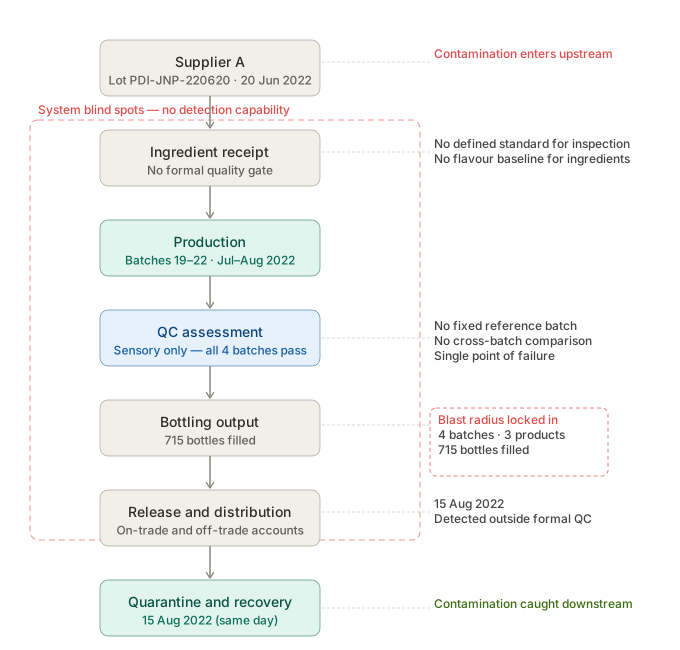
The production flow had no formal quality gates upstream of production and no automated monitoring between stages. Ingredients were received and visually inspected, batches were produced, and finished product was assessed at post-production QC before release. Any failure introduced at ingredient receipt had an unobstructed path through every stage before it could be caught.
Ingredient Supply Chain
Juniper berries were sourced from a Vietnam-based supplier. Lot PDI-JNP-220620, 50kg, was received on 20 June 2022 and used across four consecutive batches between July and August 2022. The lot entered production without any formal intake check.
At the time, production and inventory records were held in spreadsheets. The database queries shown across these pages reproduce the investigation using a PostgreSQL schema built retrospectively for this portfolio.
Observability Gaps
Three gaps in the system contributed to late detection.
Detection Architecture
The diagram below shows where contamination entered the system and where detection finally occurred.